



Learn everything about Applicant Tracking Systems (ATS) in 2026—features, benefits, how to choose the best ATS, and how AI is transforming recruitment.
Introduction
Hiring has evolved.
Spreadsheets, emails, and manual tracking are no longer enough.
As hiring becomes more competitive and complex, organizations need a system that can:
- Manage candidates efficiently
- Streamline workflows
- Improve hiring decisions
This is where an Applicant Tracking System (ATS) becomes essential.
In this guide, we’ll break down everything you need to know about ATS—from basics to advanced AI-driven capabilities.
What is an Applicant Tracking System (ATS)?
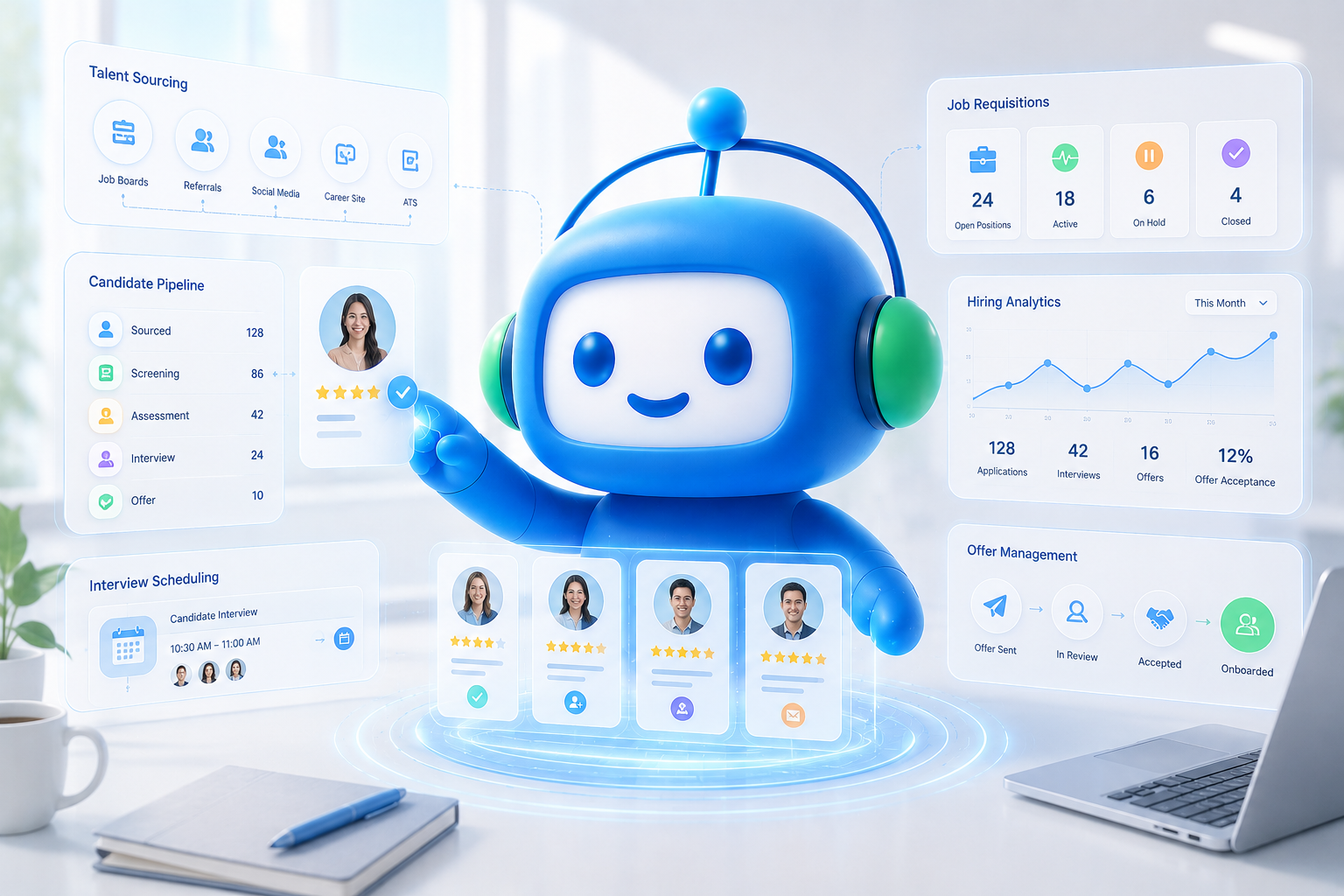
An Applicant Tracking System (ATS) is software that helps organizations manage their entire recruitment process in one place.
It allows you to:
- Post jobs across multiple platforms
- Track applications
- Manage candidate pipelines
- Collaborate with hiring teams
In simple terms:
An ATS helps you organize, automate, and optimize hiring.
Why Do Companies Need an ATS?
Without an ATS, hiring becomes:
- Disorganized
- Time-consuming
- Prone to errors
With an ATS, organizations can:
- ✔ Centralize all hiring activities
- ✔ Improve recruiter productivity
- ✔ Enhance candidate experience
- ✔ Reduce time-to-hire
- ✔ Make better hiring decisions
Key Features of an ATS
1. Job Posting & Distribution
Post jobs across:
- Job boards
- Career pages
- Social platforms
From a single dashboard.
2. Resume Parsing & Screening
Automatically:
- Extract candidate information
- Filter applications
- Shortlist relevant profiles
3. Candidate Management
Track candidates across stages:
- Applied
- Screened
- Interviewed
- Offered
4. Interview Scheduling
Automate:
- Calendar coordination
- Interview invites
- Reminders
5. Collaboration Tools
Enable teams to:
- Share feedback
- Rate candidates
- Make faster decisions
6. Recruitment Analytics
Track:
- Time-to-hire
- Source of hire
- Funnel conversion
7. Offer Management & Onboarding
Manage:
- Offer letters
- Approvals
- Paperless onboarding
Types of Applicant Tracking Systems
1. Enterprise ATS
Designed for large organizations with:
- High hiring volumes
- Complex workflows
- Multiple stakeholders
2. SMB ATS
Built for smaller teams needing:
- Simplicity
- Affordability
- Quick setup
3. Agency/Staffing ATS
Focused on:
- High-volume hiring
- Client management
- Candidate databases
4. AI-Powered ATS
The most advanced category.
Includes:
- Intelligent screening
- Predictive analytics
- Automated workflows
Benefits of Using an ATS
- ✔ Faster hiring processes
- ✔ Improved quality of hire
- ✔ Better collaboration
- ✔ Enhanced candidate experience
- ✔ Data-driven decision making
Organizations using modern ATS platforms are seeing:
- Reduced hiring cycles
- Increased recruiter productivity
- Better hiring outcomes
Common Challenges with Traditional ATS
1. Manual Processes
Many ATS platforms still require:
- Manual screening
- Repetitive tasks
2. Poor Candidate Matching
Keyword-based filtering leads to:
- Missed talent
- Irrelevant matches
3. Limited Analytics
Basic reporting without actionable insights.
4. Fragmented Systems
Multiple tools for:
- Sourcing
- Interviews
- Onboarding
Resulting in inefficiencies.
How AI is Transforming ATS in 2026
1. Intelligent Candidate Ranking
AI evaluates:
- Skills
- Experience
- Fit
To rank candidates more accurately.
2. Automated Sourcing
Finds candidates across platforms without manual effort.
3. Personalized Engagement
Automates communication while keeping it personalized.
4. Predictive Hiring Insights
Helps predict:
- Candidate success
- Hiring timelines
- Bottlenecks
How to Choose the Best ATS
1. Ease of Use
Your team should be able to adopt it quickly.
2. AI & Automation Capabilities
Look for:
- Intelligent screening
- Workflow automation
3. Integration Capabilities
Ensure it integrates with:
- HRMS
- Job boards
- Communication tools
4. Scalability
Choose a system that grows with your organization.
5. Analytics & Reporting
Real-time, actionable insights are critical.
ATS vs Recruitment CRM
| Feature | ATS | Recruitment CRM |
|---|---|---|
| Focus | Active candidates | Passive candidates |
| Use Case | Hiring workflows | Talent engagement |
| Approach | Reactive | Proactive |
Modern platforms often combine both.
Future of ATS: What to Expect
The future of ATS is:
- AI-first
- Fully automated
- Data-driven
Expect:
- ✔ End-to-end automation
- ✔ Hyper-personalized candidate journeys
- ✔ Predictive hiring decisions
Conclusion
An ATS is no longer just a tool—it’s the backbone of modern hiring.
Organizations that invest in the right system:
- Hire faster
- Hire better
- Scale efficiently
The question is not whether you need an ATS.
It’s whether your ATS is keeping up with the future of hiring.
How TalentRecruit Redefines ATS with AI
At TalentRecruit, we go beyond traditional ATS.
Our AI-first platform helps you:
- Automate sourcing, screening, and engagement
- Intelligently rank candidates
- Streamline hiring workflows
- Enable data-driven decision-making
Powered by ERIKA, our generative AI recruiter, TalentRecruit transforms hiring into a seamless, intelligent process.
From application to onboarding—everything in one platform.
Because the future of hiring isn’t just digital.
It’s intelligent.